

Discover the World of Specialized Road Freight Transport

Discover the World of Specialized Road Freight Transport

Discover the World of Specialized Road Freight Transport

In the complex world of logistics and transportation, the movement of specialized goods by road plays a fundamental role in the global economy.

From the delivery of sensitive pharmaceutical products to the transportation of heavy machinery, this industry niche is tasked with meeting the unique and often challenging demands of various sectors.

In this article, we’ll explore what specialized road freight really entails, from key processes to emerging trends, and how these operations keep the flow of the global supply chain moving.

Get ready to embark on a journey along the roads of specialized transportation and discover its crucial impact on our daily lives and the global economy.

What is road freight transport?

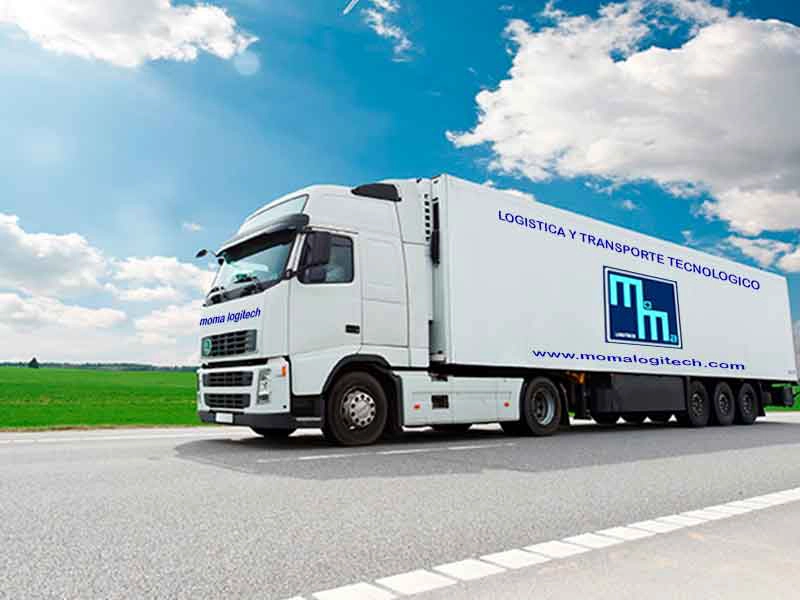
Road freight transportation is a system by which goods and products are moved from one place to another using land vehicles, such as trucks, vans and trailers, that travel on roads and highways. It is one of the most common forms of transportation of goods and plays a fundamental role in the global economy, allowing the efficient movement of goods within a region, country or even between countries.

This type of transport is very versatile and flexible, as the vehicles can reach a wide range of destinations, from urban areas to remote areas. Additionally, it offers door-to-door delivery, which means that goods can be picked up and delivered directly to and from specific locations of origin and destination.

The road freight transportation service is used to move a wide variety of products, including food, industrial products, construction materials, consumer goods, among others. Businesses and consumers depend on trucking to receive supplies, distribute finished products, and keep the supply chain running.

Although road transport offers many advantages, such as accessibility and flexibility, it also presents challenges, such as traffic congestion, environmental pollution and road safety risks. However, with proper planning and the implementation of sustainable technologies and practices, road freight transportation continues to be a vital part of global transportation infrastructure.

Considerations to take into account when contracting a road freight transportation service

When we consider a company that transports goods by road, there are several important aspects to take into account:

  • 1. Safety: Safety is a top priority. It is crucial that the company complies with all road safety regulations and standards, and that it maintains its vehicles in optimal technical condition. Additionally, driver training and compliance with safety standards are key aspects.
  • 2. Experience and reputation: It is important to investigate the company’s experience and reputation in the road transport sector. How long has the company been operating? What do your previous clients say about your services? Reputation and trustworthiness are important indicators of the quality of service you can expect to receive.
  • 3. Coverage and capacity: Consideration should be given to whether the company has the necessary capacity and coverage to meet your transportation needs. Do they offer services on the routes and geographic areas you need? Do they have the capacity to handle the volume of cargo you plan to ship?
  • 4. Technology and Tracking: Modern trucking companies often make use of advanced technology to monitor and track shipments in real time. Not only can this give you peace of mind by knowing where your cargo is at all times, but it can also improve delivery efficiency and accuracy.
  • 5. Sustainability: It is increasingly important to consider the environmental impact of transportation operations. Does the company have sustainable policies and practices? Do they use more efficient vehicles in terms of fuel consumption and emissions? Looking for a company committed to sustainability can be important for some organizations.
  • 6. Costs: Of course, the cost of the service is also a factor to take into account. However, it is important to balance the cost with the quality and reliability of the service. A company that offers very low rates may not provide the level of service you need, which could result in delays or problems with your cargo.

When considering a trucking company, it is essential to conduct thorough research and ask the right questions to ensure it meets your needs and expectations.

Advantages and disadvantages of specialized road freight services

Specialized road freight refers to transportation services that focus on the delivery of specific goods that require specialized handling due to their nature, size, fragility or other special requirements. Here are some advantages and disadvantages of these services:

Advantages:

  • 1. Flexibility: Specialized trucking services typically offer greater flexibility in terms of delivery schedules and routes, allowing them to better adapt to specific customer needs.
  • 2. Speed: Compared to other modes of transportation, such as ocean or rail transportation, specialized trucking can offer faster transit times, which is especially beneficial for urgent or short-term deliveries.
  • 3. Accessibility: Vehicles used in road transportation can access a wide range of destinations, including remote or hard-to-reach areas where other modes of transportation may have limitations.
  • 4. Real-time tracking: Many specialized trucking services offer real-time tracking systems that allow customers to monitor the location and status of their shipments at all times, providing greater visibility and control.
  • 5. Specialized handling: These services usually have trained personnel and specialized equipment for the handling of delicate, heavy or high-value merchandise, ensuring that the merchandise reaches its destination in optimal conditions.

Disadvantages:

  • 1. Cost: Specialized trucking can be more expensive than other modes of transportation, especially for goods that require specialized handling or additional equipment.
  • 2. Capacity limitations: Some types of specialized road transportation, such as refrigerated cargo transportation or oversized cargo transportation, may have loading capacity limitations, which can affect the efficiency and cost of transportation.
  • 3. Security risks: Depending on the type of merchandise transported, there are potential security risks, such as theft, damage or loss during road transport, especially for high-value merchandise.
  • 4. Environmental impact: Road transport can have a greater environmental impact compared to other modes of transport, due to fuel consumption and emissions associated with vehicles on the road.

In summary, although specialized road freight transportation offers a number of advantages, it also has some disadvantages that should be considered when selecting the most appropriate transportation method for your specific shipping needs.

Processes carried out in specialized road freight transport

In specialized road freight transport, a series of specific processes are carried out to ensure that goods are transported efficiently and safely. Here are some of the most important processes:

  • 1. Collection of the merchandise: The process begins with the collection of the merchandise at the place of origin. This may involve loading the products onto the transport vehicle from a specific location, such as a warehouse or factory.
  • 2. Proper packaging: Before loading, the goods must be properly packed to protect them during transportation. Depending on the nature of the products, this may involve the use of boxes, pallets, plastic wrap or other packaging materials.
  • 3. Labeling and marking: Each package or unit load must be properly labeled and marked with important information, such as the name and address of the sender, recipient, contents, and any special handling instructions.
  • 4. Loading into the vehicle: Once packaged and labeled, the merchandise is loaded into the transport vehicle. It is important to ensure that the load is securely placed and that proper securing techniques are used to prevent movement during travel.
  • 5. Route planning: The optimal route for transportation is planned, taking into account factors such as distance, estimated travel time, traffic conditions, and weight and dimension restrictions.
  • 6. Tracking and monitoring: During the trip, constant tracking and monitoring of the merchandise is carried out. This can be done through GPS tracking systems or through direct communication with the vehicle driver.
  • 7. Customs procedures: If the transport crosses international borders, the necessary customs procedures must be carried out. This may include submitting export and import documents, paying tariffs, and complying with specific customs regulations.
  • 8. Unloading and delivery: Once the vehicle reaches its destination, the merchandise is unloaded and delivered to the final recipient. It is important to verify the integrity of the cargo during unloading and obtain signatures of compliance from the recipient.
  • 9. Documentation Management: All transportation related documents such as invoices, transportation documents, certificates of origin and any other documents required by regulatory authorities or customers are managed and archived.
  • 10. Performance Evaluation: After transportation is completed, a performance evaluation is conducted to identify areas for improvement and ensure customer satisfaction in future shipments.

These are some of the key processes carried out in a specialized road freight transport to ensure successful and smooth delivery of products.
Characteristics and Benefits of Using Logistics Warehouses

Characteristics and Benefits of Using Logistics Warehouses

Characteristics and Benefits of Using Logistics Warehouses

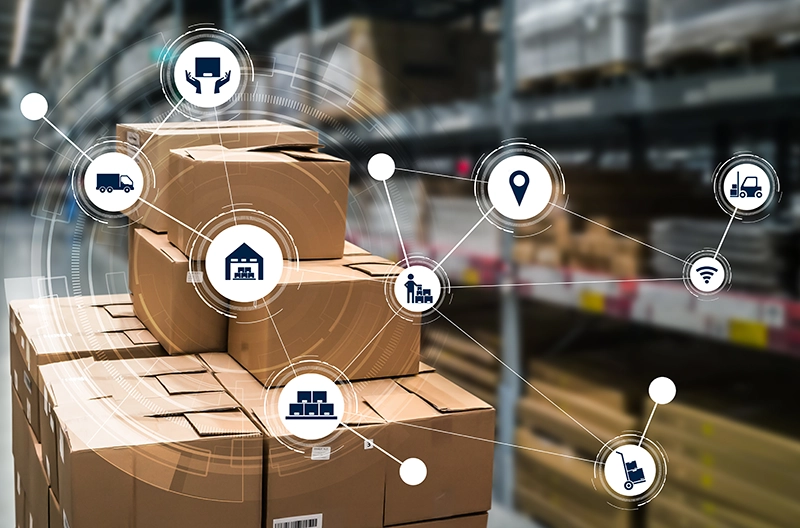
Warehouse logistics is a fundamental part of logistics management that focuses on the planning, organization and control of activities related to the storage of products, raw materials or any other type of merchandise in a warehouse or distribution center. Its main objective is to optimize inventory management and ensure that products are available at the right time and place to meet customer demand.

What are the main activities in storage logistics?

The main objective in a logistics strategy through the use of warehousing logistics is to optimize inventory management and ensure that products are available at the right time and place to meet customer demand.

Among the main activities within storage logistics we will find the following:

  • Receiving goods: Process of receiving and verifying incoming goods, ensuring their conformity with orders and agreed conditions.
  • Warehousing: Physical organization of products within the warehouse, including assigning appropriate locations, shelving, and storage systems to maximize space and facilitate efficient handling.
  • Picking and packaging: Collection of individual products according to customer orders, appropriate packaging for transportation and preparation for shipment.
  • Inventory Management: Accurately tracking inventory levels, including taking regular inventories to ensure accurate records.
  • Internal Distribution: Movement of products within the warehouse, either to replenish storage areas or to prepare them for shipment.
  • Security and maintenance: Implementation of security measures to protect products and warehouse facilities, as well as regular maintenance of equipment and systems to ensure their proper functioning.

Efficient warehouse logistics management can significantly contribute to cost reduction, improved customer satisfaction and optimization of the overall supply chain.

Benefits of using a logistics warehouse

Using a logistics warehouse can provide a number of significant benefits for companies managing supply chains and business operations.

Some of these benefits include:

  • Space Optimization: Logistics warehouses are specifically designed for efficient product storage, maximizing the use of available space and minimizing costs associated with inventory storage.
  • Cost reduction: By using a logistics warehouse, companies can reduce operating costs by outsourcing functions such as warehousing, inventory management and distribution, allowing them to focus on their core activities.
  • Greater flexibility: Fulfillment warehouses offer flexibility in terms of storage space, allowing businesses to easily adjust their storage capacity based on fluctuations in market demand.
  • Improved customer service: By having access to a well-located logistics warehouse, companies can reduce delivery times and improve distribution efficiency, resulting in a better customer experience.
  • Greater operational efficiency: Logistics warehouses are equipped with advanced technology and inventory management systems that can help improve accuracy, speed and efficiency in warehouse and distribution operations.
  • Risk reduction: Outsourcing storage and distribution operations to a logistics warehouse can help reduce the risks associated with inventory management, such as theft, damage or loss of products.
  • Access to specialized services: Fulfillment warehouses often offer a variety of additional services, such as packaging, labeling, sorting and consolidation of products, which can help simplify business operations and improve efficiency.

In summary, using a logistics warehouse can provide companies with a number of important benefits that can help them improve their competitiveness, reduce costs and offer better customer service.

What products can be stored in a logistics warehouse

Logistics warehouses can store a wide variety of products, ranging from consumer goods to raw materials and finished products.

Some examples of products that can be stored in a logistics warehouse include:

  • Consumer Products: This includes items such as canned foods, dry goods, beverages, household products (detergents, cleaning products), consumer electronics (TVs, electronic devices), clothing, shoes, toys, and personal care products .
  • Industrial products: Raw materials, components and semi-finished products used in the manufacture of other products, such as steel, plastics, chemicals, electronic components, automobile parts and industrial machinery.
  • Perishable products: Fresh foods, frozen products, dairy products, fresh fruits and vegetables, meats and bakery products can be stored in refrigerated or frozen logistics warehouses to maintain their freshness and quality.
  • Pharmaceuticals and medical products: Medications, healthcare products, medical equipment and pharmaceutical products may require special storage conditions such as controlled temperature and additional security due to their sensitive nature.
  • High-tech products: Electronic equipment, computing devices, mobile phones, tablets and other high-tech products can be stored in logistics warehouses that have additional security measures and advanced inventory management systems.
  • Bulk Products: Bulk materials such as grains, minerals, bulk chemicals and liquid products (oils, industrial liquids) can be stored in warehouses specifically designed for the storage and handling of large volumes.
  • Seasonal products: Seasonal items such as Christmas decorations, gardening products, seasonal clothing and toys can be stored in logistics warehouses and distributed according to seasonal demand.

These are just some examples of the types of products that can be stored in a logistics warehouse. The diversity of products may require different types of facilities, equipment and inventory management practices to ensure efficient and safe storage.

What products can be stored in a logistics warehouse

Managing materials stored in a logistics warehouse efficiently is essential to ensure smooth operation and maximize supply chain efficiency.

Here are some key practices for managing stored materials:

  • Implement a warehouse management system (WMS): Using an automated warehouse management system can help accurately track stored materials, inventory locations, product movements, and on-hand quantities. A WMS can optimize receiving, putting away, picking and shipping operations, improving accuracy and efficiency.
  • Establish efficient receiving processes: When receiving new materials into the warehouse, it is important to have efficient processes to inspect, verify and record the arrival of products. This includes comparing quantities received with purchase orders and identifying any damages or discrepancies.
  • Organize proper storage: Assign specific storage locations for each type of material based on its nature, size, weight and demand. Use appropriate storage systems, such as shelving, racks or automated systems, to maximize available space and facilitate the identification and retrieval of materials.
  • Conduct regular inventories: Schedule periodic inventory counts to verify the accuracy of inventory records and detect potential discrepancies or losses. Cycle or rotating inventories can help maintain continuous control over inventory and reduce the need for full counts.
  • Optimize the picking process: Strategically organize stored materials to minimize travel distances during the picking process. Use efficient picking techniques, such as batch picking, zone picking or wave picking, to maximize productivity and reduce order preparation times.
  • Implement security measures: Establish security measures to protect stored materials against theft, damage or loss. This may include installing security systems, assigning restricted access to sensitive areas, and training staff in security and material handling practices.
  • Use tracking and labeling technology: Employ technologies such as barcodes, RFID (radio frequency identification), or scanning systems to label and track stored materials in real time. This makes it easy to locate and track products within the warehouse, as well as inventory management and reporting.

Are logistics warehouses safe?

The security of logistics warehouses is a fundamental priority for logistics companies and operators. Below are some common measures implemented to ensure security in these environments:

  • Physical security systems: Logistics warehouses usually have physical security systems, such as perimeter fences, intruder alarm systems, surveillance cameras, adequate lighting systems and access controls to restrict unauthorized entry.
  • Fire Safety: Fire safety measures, such as fire extinguishers, automatic sprinklers, smoke detectors and fire alarm systems, are implemented to protect both stored materials and warehouse facilities.
  • Operational Safety Procedures: Safety procedures and protocols are established to guide daily operations, including the safe handling of equipment and machinery, proper storage of hazardous materials, and compliance with workplace safety regulations.
  • Staff Training: Regular training is provided to warehouse staff on safety topics, including safe work practices, materials handling, emergency procedures, and use of personal protective equipment.
  • Risk Management: Regular risk assessments are carried out to identify potential hazards and vulnerabilities in the warehouse, and preventive measures are implemented to mitigate these risks.
  • Supply Chain Security: Security controls are implemented throughout the supply chain to prevent theft, fraud and other security-related threats.
  • Regulatory Compliance: Compliance with relevant safety regulations and standards is ensured, both locally and internationally, including workplace safety standards, dangerous goods transport regulations and industry safety standards.

Although various measures are implemented to guarantee security in logistics warehouses, it is important to recognize that no system is infallible. Therefore, it is crucial that logistics companies and operators are always alert to potential risks and continually work to improve and strengthen their security practices.

Order preparation and picking

Order preparation and picking are two critical processes in managing a logistics warehouse that involve the selection and collection of products to satisfy customer demands. Here I briefly describe both processes:

1. Order preparation

  • Order fulfillment involves collecting specific products required to fulfill customer requests or to replenish inventories in physical or virtual stores.
  • This process typically begins with receipt of a purchase order, either from an end customer or another part of the supply chain.
  • Once the order is received, it is verified and entered into the warehouse management system (WMS).
  • Then, the corresponding products are collected from the warehouse inventory as requested in the order.
  • After collecting all necessary products, they are prepared for shipment or delivery, which may include packaging, labeling, and consolidating the products into a single package or container, as necessary.
  • Finally, the prepared orders are ready to be shipped to the end customers or destination locations.

2. Picking

  • Picking is the specific process of collecting individual products from warehouse inventory to satisfy purchase orders or inventory replenishment requests.
  • There can be different picking methods, such as batch picking, zone picking, wave picking, among others, each designed to maximize efficiency and productivity depending on the needs of the warehouse.
  • During the picking process, warehouse workers use devices such as barcode scanners or RFID-enabled mobile devices to identify products and storage locations.
  • Once a product has been picked, it is recorded in the system as “picked” and proceeds to the next storage location based on the optimized route defined by the warehouse management system.
  • The picking process continues until all products necessary to complete the purchase order or work lot have been picked.
  • After all the products have been collected, we proceed to the order preparation stage to package and ship the products.

Efficiency in order preparation and picking is crucial to ensure a smooth logistics operation and meet customer expectations in terms of delivery time and order accuracy. Advanced technologies, such as warehouse management systems (WMS) and mobile tracking devices, can help improve accuracy and efficiency in these processes.

Process for transporting a 500 kg safe

Process for transporting a 500 kg safe

Process for transporting a 500 kg safe

Our safe box client entrusts us with a new delivery to a shopping center in Getafe, on this occasion we transport, unpack, locate and anchor following current regulations.

How to overcome difficulties when transporting a safe

Although on many occasions we are asked to carry out transfers of these same safes, undocking, dislocating and transporting them to the new location, on this occasion the safe has a weight greater than 500 Kgs, it is transported on a pallet as the factory sends it to us.

When transporting a safe , we may encounter numerous difficulties and architectural barriers that require having the necessary tools and instruments to overcome these adversities.

Some of these architectural barriers that we may encounter may be such as the case of stairs, which we correct using stair-climbing carts or stair-climbing robots. Sometimes, given the volume of the box or due to its weight, it cannot be overcome using stairs, we will use trucks. pen to access through the façade, either through windows, balconies, roofs…

How to safely transport a safe

First, the door is opened according to the code, then the pallet is lowered with the help of nail or lever bars, nylon rollers which allow us to give greater ease of movement to these 500 kilos and with the help of Our specialists place a pallet jack where the client designates.

It is at this moment that once located, the drilling is carried out to be able to anchor the safe using a chemical plug and expanding screw, following the procedure of current regulations.

Once the work is completed, the client is given a quick guide along with the keys and the opening procedure is briefly explained. We remove all the packaging that generated the delivery.

Transport or transfer of computer rack cabinets

Transport or transfer of computer rack cabinets

Transport or transfer of computer rack cabinets

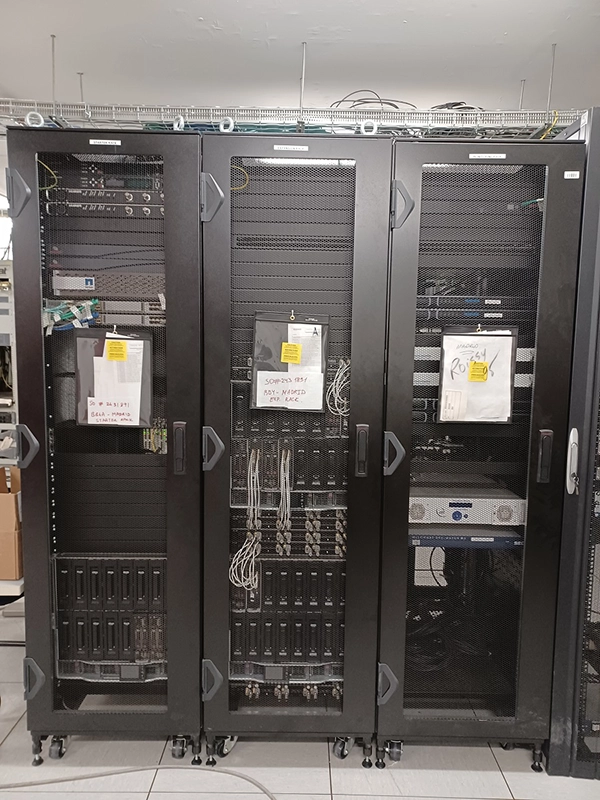
At Moma Logitech we are experts in moving computer racks, these are usually quite heavy and bulky and given their fragility, they require special treatment.
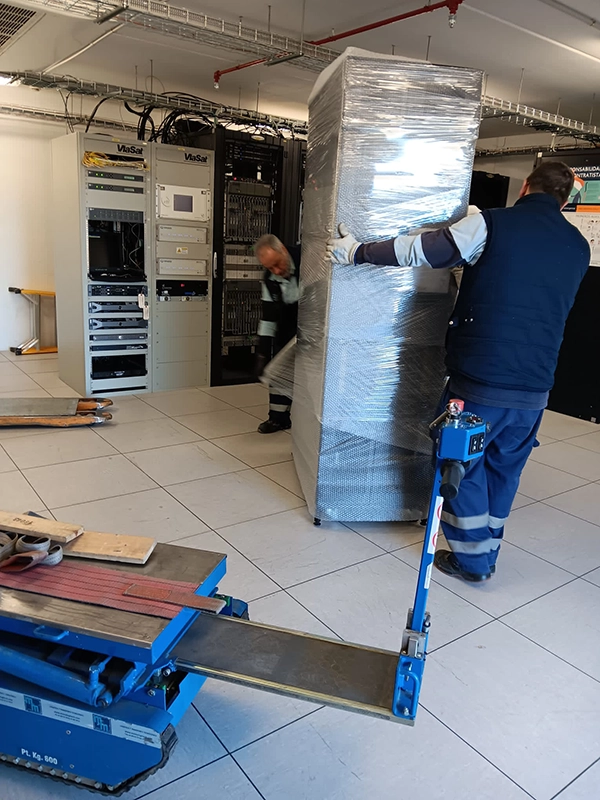
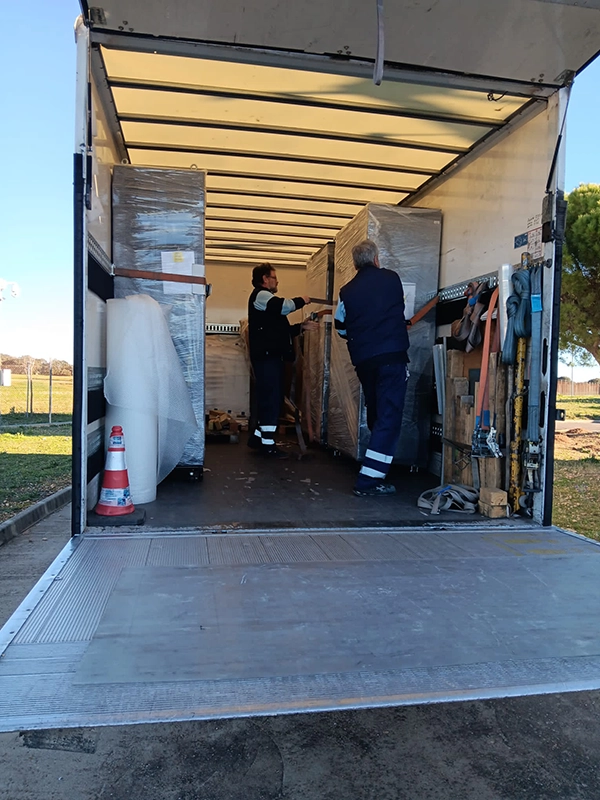
On this occasion, our client entrusts us with moving 3 Racks containing hard drives and batteries, around 600 kg/unit, from a telecommunications headquarters in Arganda del Rey to a data processing center in Madrid.
At first, we check that the equipment does not have any type of connection and that all the moving parts are well fixed. Once all this has been checked, we proceed to protect the equipment with bubble plastic, corner pieces and film to cushion any type of blow that may occur. may receive during handling and transportation.
In this location we encounter the difficulty that said equipment is higher than the doors, so we have to use the caterpillar robot which will tilt the equipment so that it can pass through the doors.
Once the obstacle of the doors has been overcome, the robot will return the equipment to its natural position, which is equipped with wheels for easy handling. We will protect the floor with polypropylene fibers so that they can absorb any impact that may arise from the irregularity of the ground.
These equipment will be loaded into our vehicles equipped with a lifting platform, tied with different straps of slings, thus allowing us to completely mobilize the equipment. Our vehicles are equipped with pneumatic suspension which means that even if there is any imperfection on the road, the transported equipment will not suffer any type of damage.