





The Route to Success: Discover the World of Specialized Road Freight Transport. from key processes to emerging trends
Characteristics and Benefits of Using Logistics Warehouses
Characteristics and Benefits of Using Logistics Warehouses
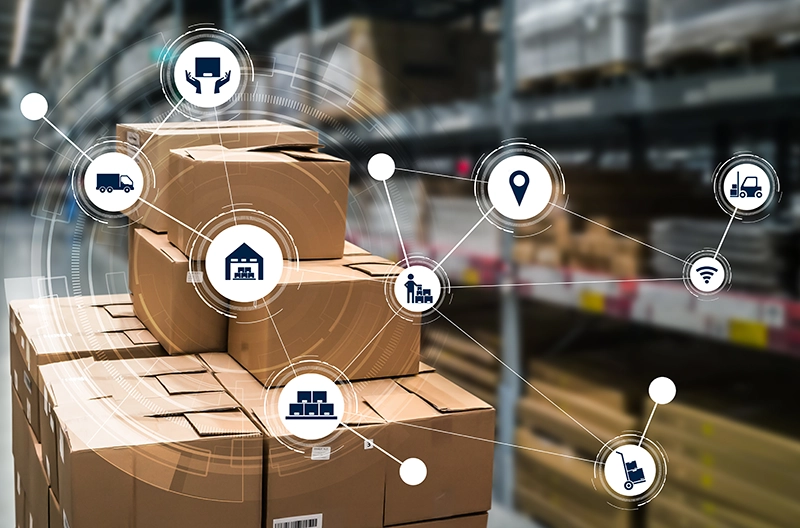
Warehouse logistics is a fundamental part of logistics management that focuses on the planning, organization and control of activities related to the storage of products, raw materials or any other type of merchandise in a warehouse or distribution center. Its main objective is to optimize inventory management and ensure that products are available at the right time and place to meet customer demand.
Contents that you will find in this article
What are the main activities in storage logistics?
The main objective in a logistics strategy through the use of warehousing logistics is to optimize inventory management and ensure that products are available at the right time and place to meet customer demand.
Among the main activities within storage logistics we will find the following:
- Receiving goods: Process of receiving and verifying incoming goods, ensuring their conformity with orders and agreed conditions.
- Warehousing: Physical organization of products within the warehouse, including assigning appropriate locations, shelving, and storage systems to maximize space and facilitate efficient handling.
- Picking and packaging: Collection of individual products according to customer orders, appropriate packaging for transportation and preparation for shipment.
- Inventory Management: Accurately tracking inventory levels, including taking regular inventories to ensure accurate records.
- Internal Distribution: Movement of products within the warehouse, either to replenish storage areas or to prepare them for shipment.
- Security and maintenance: Implementation of security measures to protect products and warehouse facilities, as well as regular maintenance of equipment and systems to ensure their proper functioning.
Efficient warehouse logistics management can significantly contribute to cost reduction, improved customer satisfaction and optimization of the overall supply chain.
Benefits of using a logistics warehouse
Using a logistics warehouse can provide a number of significant benefits for companies managing supply chains and business operations.
Some of these benefits include:
- Space Optimization: Logistics warehouses are specifically designed for efficient product storage, maximizing the use of available space and minimizing costs associated with inventory storage.
- Cost reduction: By using a logistics warehouse, companies can reduce operating costs by outsourcing functions such as warehousing, inventory management and distribution, allowing them to focus on their core activities.
- Greater flexibility: Fulfillment warehouses offer flexibility in terms of storage space, allowing businesses to easily adjust their storage capacity based on fluctuations in market demand.
- Improved customer service: By having access to a well-located logistics warehouse, companies can reduce delivery times and improve distribution efficiency, resulting in a better customer experience.
- Greater operational efficiency: Logistics warehouses are equipped with advanced technology and inventory management systems that can help improve accuracy, speed and efficiency in warehouse and distribution operations.
- Risk reduction: Outsourcing storage and distribution operations to a logistics warehouse can help reduce the risks associated with inventory management, such as theft, damage or loss of products.
- Access to specialized services: Fulfillment warehouses often offer a variety of additional services, such as packaging, labeling, sorting and consolidation of products, which can help simplify business operations and improve efficiency.
In summary, using a logistics warehouse can provide companies with a number of important benefits that can help them improve their competitiveness, reduce costs and offer better customer service.
What products can be stored in a logistics warehouse
Logistics warehouses can store a wide variety of products, ranging from consumer goods to raw materials and finished products.
Some examples of products that can be stored in a logistics warehouse include:
- Consumer Products: This includes items such as canned foods, dry goods, beverages, household products (detergents, cleaning products), consumer electronics (TVs, electronic devices), clothing, shoes, toys, and personal care products .
- Industrial products: Raw materials, components and semi-finished products used in the manufacture of other products, such as steel, plastics, chemicals, electronic components, automobile parts and industrial machinery.
- Perishable products: Fresh foods, frozen products, dairy products, fresh fruits and vegetables, meats and bakery products can be stored in refrigerated or frozen logistics warehouses to maintain their freshness and quality.
- Pharmaceuticals and medical products: Medications, healthcare products, medical equipment and pharmaceutical products may require special storage conditions such as controlled temperature and additional security due to their sensitive nature.
- High-tech products: Electronic equipment, computing devices, mobile phones, tablets and other high-tech products can be stored in logistics warehouses that have additional security measures and advanced inventory management systems.
- Bulk Products: Bulk materials such as grains, minerals, bulk chemicals and liquid products (oils, industrial liquids) can be stored in warehouses specifically designed for the storage and handling of large volumes.
- Seasonal products: Seasonal items such as Christmas decorations, gardening products, seasonal clothing and toys can be stored in logistics warehouses and distributed according to seasonal demand.
These are just some examples of the types of products that can be stored in a logistics warehouse. The diversity of products may require different types of facilities, equipment and inventory management practices to ensure efficient and safe storage.
What products can be stored in a logistics warehouse
Managing materials stored in a logistics warehouse efficiently is essential to ensure smooth operation and maximize supply chain efficiency.
Here are some key practices for managing stored materials:
- Implement a warehouse management system (WMS): Using an automated warehouse management system can help accurately track stored materials, inventory locations, product movements, and on-hand quantities. A WMS can optimize receiving, putting away, picking and shipping operations, improving accuracy and efficiency.
- Establish efficient receiving processes: When receiving new materials into the warehouse, it is important to have efficient processes to inspect, verify and record the arrival of products. This includes comparing quantities received with purchase orders and identifying any damages or discrepancies.
- Organize proper storage: Assign specific storage locations for each type of material based on its nature, size, weight and demand. Use appropriate storage systems, such as shelving, racks or automated systems, to maximize available space and facilitate the identification and retrieval of materials.
- Conduct regular inventories: Schedule periodic inventory counts to verify the accuracy of inventory records and detect potential discrepancies or losses. Cycle or rotating inventories can help maintain continuous control over inventory and reduce the need for full counts.
- Optimize the picking process: Strategically organize stored materials to minimize travel distances during the picking process. Use efficient picking techniques, such as batch picking, zone picking or wave picking, to maximize productivity and reduce order preparation times.
- Implement security measures: Establish security measures to protect stored materials against theft, damage or loss. This may include installing security systems, assigning restricted access to sensitive areas, and training staff in security and material handling practices.
- Use tracking and labeling technology: Employ technologies such as barcodes, RFID (radio frequency identification), or scanning systems to label and track stored materials in real time. This makes it easy to locate and track products within the warehouse, as well as inventory management and reporting.
Are logistics warehouses safe?
The security of logistics warehouses is a fundamental priority for logistics companies and operators. Below are some common measures implemented to ensure security in these environments:
- Physical security systems: Logistics warehouses usually have physical security systems, such as perimeter fences, intruder alarm systems, surveillance cameras, adequate lighting systems and access controls to restrict unauthorized entry.
- Fire Safety: Fire safety measures, such as fire extinguishers, automatic sprinklers, smoke detectors and fire alarm systems, are implemented to protect both stored materials and warehouse facilities.
- Operational Safety Procedures: Safety procedures and protocols are established to guide daily operations, including the safe handling of equipment and machinery, proper storage of hazardous materials, and compliance with workplace safety regulations.
- Staff Training: Regular training is provided to warehouse staff on safety topics, including safe work practices, materials handling, emergency procedures, and use of personal protective equipment.
- Risk Management: Regular risk assessments are carried out to identify potential hazards and vulnerabilities in the warehouse, and preventive measures are implemented to mitigate these risks.
- Supply Chain Security: Security controls are implemented throughout the supply chain to prevent theft, fraud and other security-related threats.
- Regulatory Compliance: Compliance with relevant safety regulations and standards is ensured, both locally and internationally, including workplace safety standards, dangerous goods transport regulations and industry safety standards.
Although various measures are implemented to guarantee security in logistics warehouses, it is important to recognize that no system is infallible. Therefore, it is crucial that logistics companies and operators are always alert to potential risks and continually work to improve and strengthen their security practices.
Order preparation and picking
Order preparation and picking are two critical processes in managing a logistics warehouse that involve the selection and collection of products to satisfy customer demands. Here I briefly describe both processes:
1. Order preparation
- Order fulfillment involves collecting specific products required to fulfill customer requests or to replenish inventories in physical or virtual stores.
- This process typically begins with receipt of a purchase order, either from an end customer or another part of the supply chain.
- Once the order is received, it is verified and entered into the warehouse management system (WMS).
- Then, the corresponding products are collected from the warehouse inventory as requested in the order.
- After collecting all necessary products, they are prepared for shipment or delivery, which may include packaging, labeling, and consolidating the products into a single package or container, as necessary.
- Finally, the prepared orders are ready to be shipped to the end customers or destination locations.
2. Picking
- Picking is the specific process of collecting individual products from warehouse inventory to satisfy purchase orders or inventory replenishment requests.
- There can be different picking methods, such as batch picking, zone picking, wave picking, among others, each designed to maximize efficiency and productivity depending on the needs of the warehouse.
- During the picking process, warehouse workers use devices such as barcode scanners or RFID-enabled mobile devices to identify products and storage locations.
- Once a product has been picked, it is recorded in the system as “picked” and proceeds to the next storage location based on the optimized route defined by the warehouse management system.
- The picking process continues until all products necessary to complete the purchase order or work lot have been picked.
- After all the products have been collected, we proceed to the order preparation stage to package and ship the products.
Efficiency in order preparation and picking is crucial to ensure a smooth logistics operation and meet customer expectations in terms of delivery time and order accuracy. Advanced technologies, such as warehouse management systems (WMS) and mobile tracking devices, can help improve accuracy and efficiency in these processes.
Discover the World of Specialized Road Freight Transport
read more
Characteristics and Benefits of Using Logistics Warehouses
We tell you how storage logistics works with the use of logistics warehouses. Main features and benefits that they can bring you

Process for transporting a 500 kg safe
Discover how we have carried out the transport of a 500 kg safe from one of our clients to the final client, successfully completing the entire process of transport, packaging and fixing in the final location.